

To the Stars: Baylor's New Aerospace Degree
A Bachelor of Science in Aerospace Engineering joined the rank of degree offerings in Fall 2025 as part of a greater promise to serve students’ interests in an ever-evolving world of engineering industry.

A New Dawn
In the Spring of 2025, the Baylor University Board of Regents approved a Bachelor of Science degree in aerospace engineering, a program that was previously offered as a concentration in the Department of Mechanical Engineering. This significant part of the School of Engineering and Computer Science (ECS) means new opportunities for students in this dynamic and high-demand field.
“In a global society that will face many technology challenges and opportunities in the future, we plan to create several pathways for our students to make an impact,” Daniel Pack, Ph.D., dean of the School of Engineering and Computer Science, said. “We have a real opportunity to carve out distinction for Baylor University in the engineering and computer science spaces.”
The aerospace engineering curriculum consists of courses designed to equip students to work in the aeronautics or astronautics industries. Aerospace engineering students will study aerodynamics, aerospace structures, air-breathing rocket propulsion, aircraft flight dynamics, orbital mechanics and space flight. They will also gain experience in both aircraft and spacecraft design. These skills provide the technical foundation needed to design, analyze and operate complex aerospace systems. Mastery of these areas enables engineers to solve real-world challenges, ensuring safe, efficient and innovative flight technologies.
Additionally, students will gain core engineering competencies, such as engineering problem-solving skills and knowledge of engineering materials, thermodynamics, numerical methods, dynamic systems and computer-aided design. Technical electives give students flexibility to explore topics such as computational fluid dynamics, finite element methods and composite materials.
“For years, students have expressed strong interest in pursuing an aerospace engineering degree,” said Liang Sun, Ph.D., associate professor of mechanical engineering. “While the mechanical engineering department has long offered an aerospace concentration, the launch of a standalone degree directly addresses student — and job — demand.”
Placement for the Future
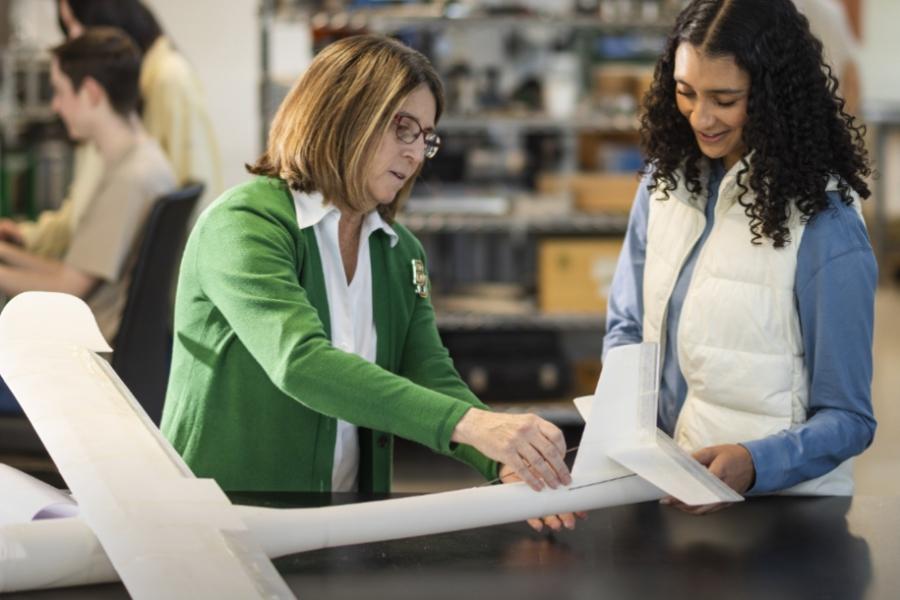
The demand for aerospace engineers in Texas is booming. The U.S. Bureau of Labor Statistics projects that the number of aerospace engineering jobs available will increase by 6% from 2023 to 2033. This is above the average growth rate for all occupations.
It is also projected that there will be about 4,200 openings for aerospace engineers each year for the next 10 years. A degree in aerospace engineering can provide high earning potential, with the average annual salary of an aerospace engineer being $130,720, according to the Bureau of Labor Statistics. Among engineering professions, aerospace engineers have the second highest average salaries, behind only computer engineers.
Furthermore, the addition of this degree program reflects the significant aerospace industry not only in Texas, but in the Waco area with L3Harris and SpaceX having major facilities locally that are positioned to provide hands-on learning and research opportunities for students. Invaluable internships will be at students’ fingertips.
“We have already established strong partnerships with local industry, such as collaborations with L3Harris through outreach events, summer camps and research projects,” said Sun. “With the launch of Baylor’s aerospace engineering program, our students will not only gain the technical expertise needed in the field, but they will also benefit from these industry connections. This combination will prepare them exceptionally well to pursue competitive internships and career opportunities in aerospace.”
With this new degree plan, Baylor is solidifying its promise to equip students to flourish and remain competitive in the evolving job market.
“We’re now able to provide specialized students to companies like L3Harris and SpaceX to further those collaborations,” said Jill Patterson, Ph.D., assistant department chair of mechanical engineering.
Baylor prides itself on high workforce placement rates following graduation, and this new degree plan highlights the University’s commitment to helping students meet their unique goals.
Forefront of Research
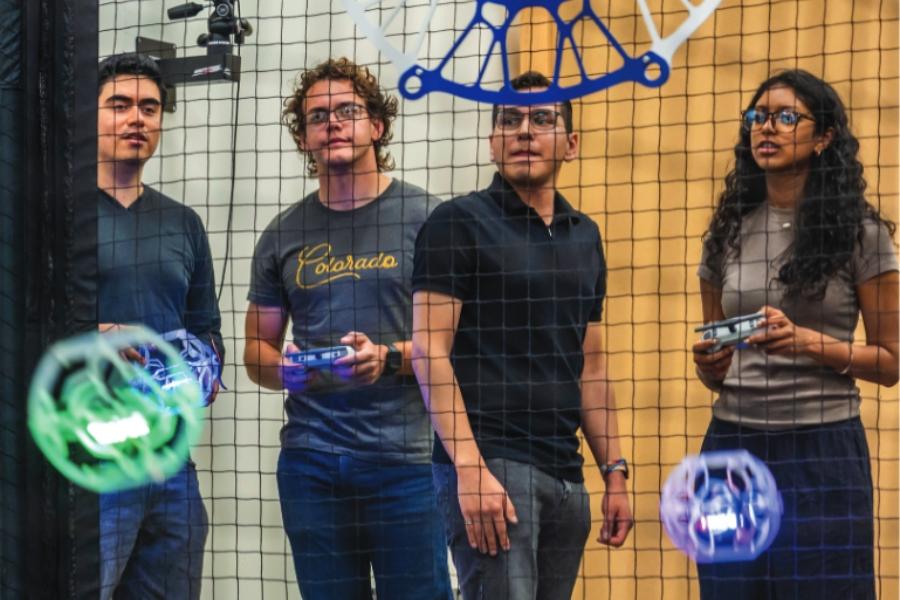
While pursuing their degrees, students can participate in hands-on research that allows them to hone their technical skills.
“That’s something that I love about Baylor — that students get to do undergraduate research so early on and are able to flourish in that way,” said Patterson.
A number of premier Baylor ECS faculty have long-established research in the aerospace field and feel excited at the prospect of their research to reach new heights. Their work demonstrates the importance of proper research and methodology to the students they teach and mentor. Faculty research is further bolstered by the University’s status as an R1 institution.
Sun, who serves as the director of the Advanced Vehicle Intelligence and Autonomy (AVIA) Laboratory, is working on novel multi-fuel injectors for jet turbines. His lab leads projects in Advanced Air Mobility, multi-aircraft operations and airborne wind energy systems — all core areas within aerospace engineering.
Stephen McClain, Ph.D., professor of mechanical engineering, studies the processes through which ice forms on aircraft surfaces. He uses wind tunnels and computer modeling to understand how the surface of the ice interacts with airflow around an aircraft, potentially leading to advances that could prevent disasters.
The launch of Baylor’s new aerospace engineering degree will significantly amplify the University’s existing research by aligning student education with the cutting-edge work already underway in faculty labs. With professors like Sun advancing jet turbine technology and autonomous flight systems and McClain exploring aircraft icing through wind tunnel experimentation and computational modeling, the program will empower students to apply their unique skills to high-impact projects early in their academic careers. This synergy between curriculum and research not only accelerates innovation but also prepares students to enter the aerospace industry with hands-on experience in solving real-world engineering challenges.
A Real-World Application
Baylor’s School of ECS hosts several organizations, including honor societies and professional, service and competition organizations that further connect students with peers and mentors at the cutting edge of innovation and practicality in aerospace studies. These student organizations have contributed to the groundswell of student interest in a dedicated major to the field.
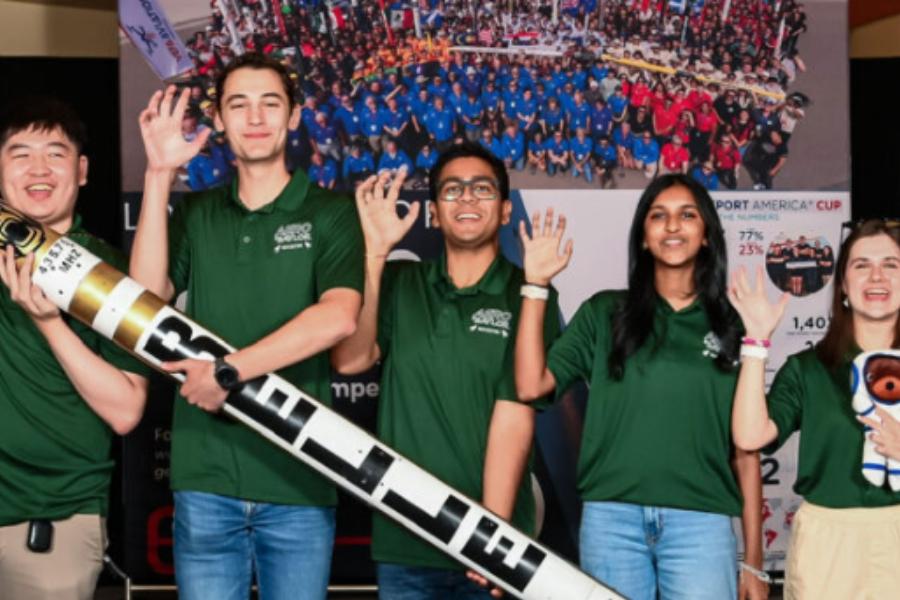
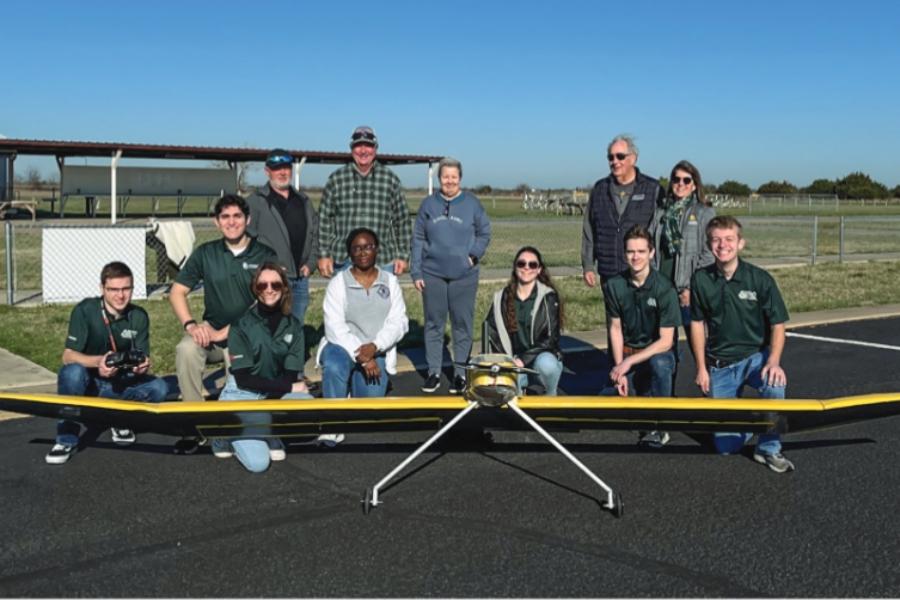
Recently, Baylor student teams have won multiple 3D-printed aircraft competitions and robotic drone blimp competitions. Other groups have competed in rocketry competitions, such as the Spaceport America Cup, demonstrating strong interest and excellence in these fields.
Senior engineering student Taylor Martini is a member of Aero at Baylor, the aerospace engineering club with different project teams, like the 3D Printed Aircraft Team. Club members include a variety of majors with a passion for aviation, aeronautics and aerospace.
“The team I was on last year 3D printed a drone to fly for a competition,” Martini said. “We also competed for the first time in Spaceport America, an international rocketry competition, and we built a 12-foot rocket and then launched it 10,000 feet in the air.”
The Sky is the Limit
The addition of this new degree offering demonstrates Baylor’s place at the forefront of emerging technologies and fields while also affirming students’ interests in the field. Not only will students be able to benefit from expanded specialty course offerings, but current and prospective faculty will continue to forge new research opportunities looking ahead.
“We are intentionally tapping into the industry demands with our innovative degree offerings and recruiting faculty who are nationally recognized experts in their fields and who also are dedicated to the research and mentoring relationships within a Christian community. That’s the Baylor ECS difference that gives our students access to the discipline in ways they wouldn’t receive elsewhere,” said Pack.
Baylor and the School of Engineering and Computer Science have taken the next step to plant and nurture the aerospace engineering program at Baylor into one of the premier programs preparing students to lead and shape this growing industry. We are truly shooting for the stars.