

Research at the Intersection of Engineering and Heart
Biomedical Engineering advances at Baylor

This past summer, as the sun blazed hot across the Texas sky, four undergraduate students were staying cool working with Dr. Seung Kim’s research group in the Baylor Research and Innovation Collaborative (BRIC). Inside the Micro and Nanofabrication Cleanroom, the students were learning to build prototypes of a point-of-care biosensor device that could someday help instantly detect biomarkers for cancers, cardiovascular diseases or even infectious diseases.
These undergraduates, along with several graduate students who work year-round in Kim’s lab, are playing a key role in advancing his research. Kim, a professor in the Department of Electrical and Computer Engineering in the School of Engineering and Computer Science, came to Baylor in 2016 equipped with a National Science Foundation CAREER Grant and an idea for developing a low-cost biosensor for point-of-care medical diagnostics. While Baylor didn’t yet have a cleanroom at that time, it did offer a welcoming, supportive environment for his research.
“They were ready to invest in me,” Kim said. “It was obvious they wanted to continue to move forward in expanding their research capabilities.”
Now Kim is one of many researchers advancing the field of biomedical engineering, or BME, at Baylor. Biomedical engineering is currently offered as a Master of Science degree for graduate students and a concentration for undergraduate engineering students.
At both levels, it’s clear the interest in the field is growing by leaps and bounds. Baylor now has nine faculty members involved with biomedical research and teaching, according to Benjamin Kelley, Ph.D., director of the general engineering program.
“BME is bridging the gap between engineering and all the medical research at the University — two things the institution is already known for,” Kelley said. “It’s natural to want to put these two together to see what they can do.”
Bioengineering is also specifically named in the Baylor in Deeds strategic plan, in which one commitment, “Broadening Interdisciplinary Research and Impact,” focuses on cultivating research strength related to human health, including in areas like bioengineering. And by broadening biomedical engineering’s presence, Kelley said, Baylor can recruit high-caliber students that may not otherwise have had a chance at the Baylor experience.
“The average entering biomedical engineering student is among the most qualified students in the engineering programs,” Kelley said. “So we think it’s going to attract some very fine students.”
Bringing Undergraduates into the Mix
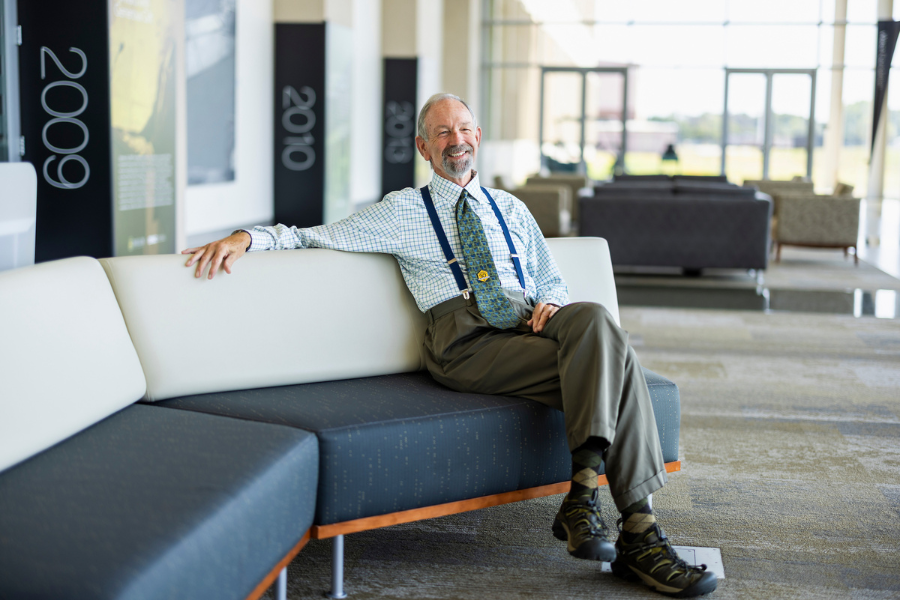
Each summer Kim recruits a new crop of qualified undergraduate students to work in his lab (funded by a National Institutes of Health grant that compels undergraduate mentorship). The selected students have often already chosen a biomedical concentration as part of their engineering degree, and they are eager to get hands-on experience in a lab like Kim’s.
“I love to have undergraduate researchers,” Kim said. “They must go through extensive training to fabricate the devices, and they need to be able to use the equipment and tools in the cleanroom. This is not something they can learn in the classroom.”
Kim estimates that students must go through several months of training to learn how to operate and process everything in the lab. “But then,” he said, “some of them do a really great job fabricating samples and really help us a lot.”
With their help — and the help of his dedicated crew of graduate students — Kim’s lab is nearing optimization of their biosensor, paving the way for demonstration of the device’s use. He hopes that very soon he will be able to show how his solution can be an effective way to detect biomarkers at a fraction of the cost of other biosensors, which would then allow them to be used for early disease detection and also be deployed in developing countries (where diagnostic tests can be cost-prohibitive).
The Future of Healthcare
Like Kim’s biosensor, devices created using bioengineering are expected to proliferate in the healthcare field as the population ages.
“Folks are living longer because of advances in medicine and because doctors have more tools at their disposal,” Kelley said. “Many of those tools come from biomedical engineering.”
Kelley, whose background is in cardiovascular research, names a few examples of common BME devices. Say a patient’s heart is beating too fast, he says; doctors implant a pacemaker. Not pumping well enough? Add an assisting pump. Or maybe their heart has a propensity to stop beating. Put an implantable defibrillator in place.
“All that’s a product of biomedical engineering,” Kelley said.
As people continue to live longer — and the healthcare industry expands in kind — the need for biomedical engineers will also accelerate. In fact, according to the United States Bureau of Labor Statistics, employment of bioengineers and biomedical engineers is projected to grow 7% from 2023 to 2033, faster than the average for all occupations.
Engineering with Heart
Those job prospects may be a major reason why about half the prospective students who visit Baylor’s School of Engineering and Computer Sciences inquire about a bioengineering course of study. But Kim believes that it also has something to do with Baylor students’ innate desire to care for others.
“Our Baylor students, many of them have the heart to use their engineering skills to save lives and help others,” Kim said. “What’s a good combination of that? Biomedical engineering. So, it’s kind of a natural trend.”
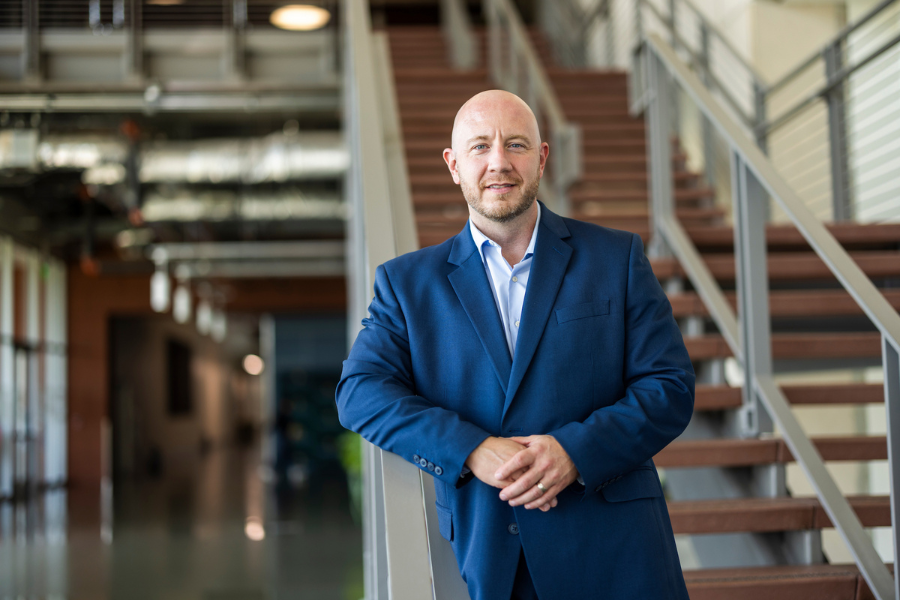
Brent Craven, Ph.D., is a BME-focused, first-year mechanical engineering professor — and proof of that heart for helping others. As it happens, Craven’s nephew was born with a congenital heart defect that has already required multiple surgeries.
“Just seeing the struggles he went through … that’s one of the reasons why I decided to more strategically pursue biomedical applications,” Craven said.
Craven came to Baylor this year from the Center for Devices and Radiological Health at the U.S. Food and Drug Administration (FDA), where he conducted research to advance medical device innovation and developed tools to accelerate the assessment of device performance and safety. He was integral in leading efforts to use computer modeling and simulation for evaluating devices, such as stents, heart valves and ventricular assist devices.
But after a decade at the FDA, Craven wanted the chance to do more clinical research than his position afforded, hence the move to academia.
“I was drawn to Baylor because of its Christian mission and because it’s a growing R1 research university,” Craven said. The fact that Baylor in Deeds calls out bioengineering as a focus area was also a major draw for him. “So far I’ve gotten a lot of support, and I am excited that it is a high priority for the University.”
In addition to teaching an undergraduate course, Craven is slowly ramping up his on-campus research projects, which range from developing better models for predicting whether cardiovascular devices will damage blood to validating computer modeling for surgical planning of congenital heart defect surgeries on patients like his nephew.
All of Craven’s projects will heavily involve both undergraduate and graduate students, much like in Kim’s lab. For Kim, that’s a win-win for everyone.
“Expanding our biomedical engineering program means we can grow, and do more research, and not only teach students, but help them find their calling and their career,” Kim said. “At the same time, we can help supply the workforce the nation needs. So, we are moving in a very good direction.”